
Hero Siege Price Check - How Trading Values Are Tracked
How Hero Siege players price-check items: community price tables for keys, runes, gems and crafting, and why in-game value differs from the game price.
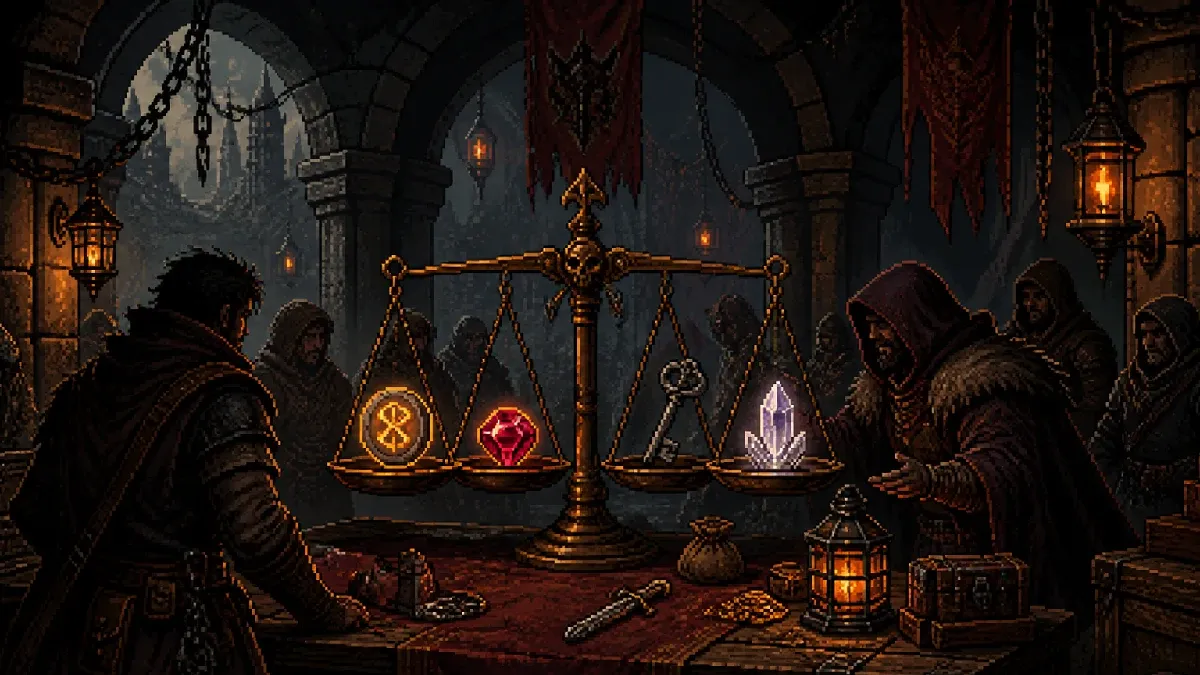
“Price check” means two completely different things in Hero Siege searches, and getting the wrong one wastes your time.
- In-game trading value — what a key, rune or item is worth to another player. That is what this page covers.
- The retail price of the game — what Hero Siege costs on Steam. That is a storefront question, not a wiki one.
How do you price-check an item in Hero Siege?
Through community-maintained price tables, not an official source. The categories tracked separately are:
| Table | Covers |
|---|---|
| Key prices | Dungeon and boss keys |
| Rune prices | Individual runes |
| Gem prices | Gems |
| Crafting prices | Crafting materials and inputs |
Keys, runes and gems are priced separately because they are traded separately — a rune’s value comes from the runewords it enables, which is a different market from key demand.
Why is there no official price list?
Because there is no official trading platform to generate one. Hero Siege’s economy runs on player-to-player trading, so every price is consensus rather than data. Community tools aggregate what players report, which means:
- Prices lag real shifts, especially just after a patch changes drop rates.
- A price table from last season may be badly wrong this season.
- Thinly traded items have less reliable prices than common ones.
That last point matters most for rare items: the fewer trades, the more a single outlier moves the listed value.
What moves prices in Hero Siege?
Drop rates, directly. The Season 10 patch buffed satanic zone drops substantially — magic find up 100% across all three tiers, rune drops from 25% to 35% and angelic drops from 20% to 28% on Inferno / Hell 5.
Anything that becomes easier to obtain becomes cheaper. If you are holding runes or angelic items to trade, a drop-rate buff works against you, and a nerf works for you.
How should you use a price check?
Treat it as a range, not a quote. Check when the table was last updated, compare against what similar items actually sold for, and be more sceptical the rarer the item is.
Rune demand makes more sense beside the runeword guide, while key prices depend on the key-dungeon system. Use the Magic Find guide to understand supply and the patch summary to catch the changes most likely to invalidate an older price table.
Next step
Check the patch notes before trading anything valuable — a drop-rate change can move a price further in one patch than trading activity moves it in a month.
Related Articles
guides
Hero Siege Patch Notes - Recent Changes That Matter
What recent Hero Siege patch notes changed: satanic zone drop buffs, controller improvements, companion pickups, and a false-positive ban fix.
weapons
Hero Siege Runewords - Base Item Rules and Socket Crafting
How to craft runewords in Hero Siege: why the base must be a Common white item, why socket count must match exactly, and the recipe that adds sockets.
guides
Hero Siege Season 10 Ebontharn - What Changed
Season 10 Ebontharn added Act 9, the Abyssal Chest map mechanic and satanic zone drop buffs. What the season brought and what is coming after it.
Was this helpful?
Thanks for the feedback!